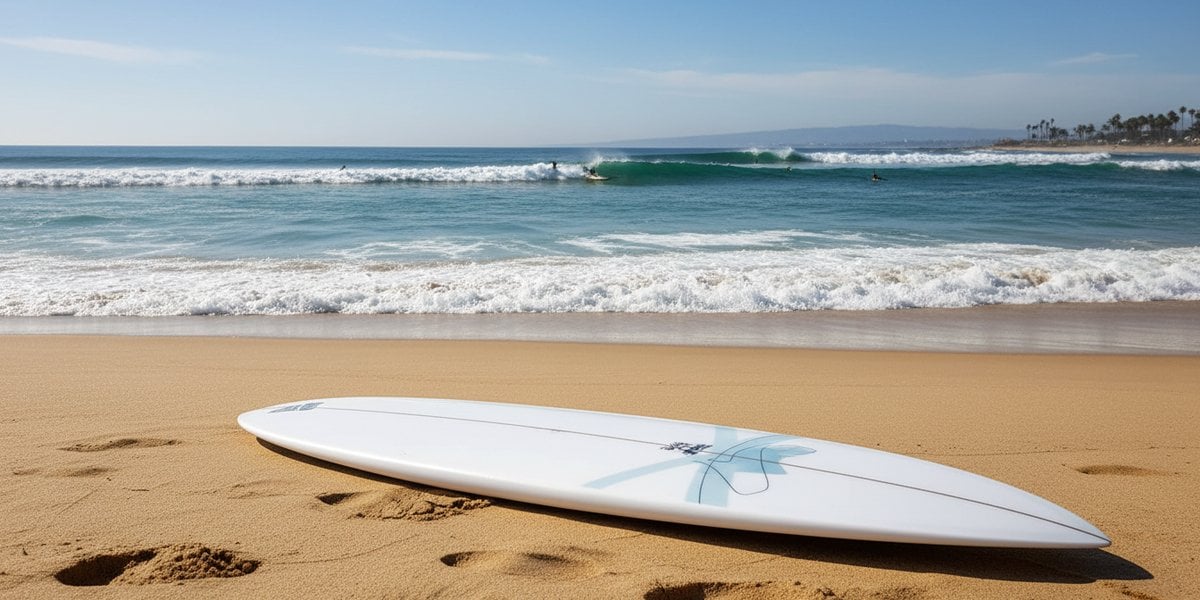
Choosing a surfboard is one of the most important decisions for any surfer, whether it's your first board or you're looking to upgrade. The right board can make all the difference between a frustrating session and an enjoyable, rewarding experience on the waves. So how do you choose correctly?
Board Volume - The Most Important Metric
Board volume, measured in liters, is the most critical factor in choosing a suitable surfboard. The higher the volume, the more the board will float and the easier it will be to paddle and catch waves. For beginners, it's recommended to start with a high-volume board - usually between 50-70 liters, depending on your weight and height.
The general formula is simple: your body weight in kilograms multiplied by 0.5-0.7 for beginners, 0.4-0.5 for intermediate surfers, and 0.3-0.4 for advanced surfers. For example, if you weigh 70 kg and you're a beginner, you'd want a board of about 40-50 liters at least.
Board Length and Its Effect on Surfing
Board length affects maneuverability and stability. Longer boards (8-9 feet) offer more stability and are easier to paddle, making them perfect for beginners. They're more 'forgiving' of mistakes and allow you to learn the basics comfortably.
Shorter boards (5-7 feet) allow sharper maneuvers and higher speeds, but require more skill and stability. Most advanced surfers prefer shorter boards that allow them to perform dynamic maneuvers and utilize the wave's full potential.
Width and Thickness - The Additional Parameters
Board width affects stability and speed. A wider board will be more stable but less agile, while a narrower board allows quick maneuvers but requires better balance. Board thickness directly affects volume and buoyancy - a thicker board will float more but may be less responsive.
Recommendations by Level
For absolute beginners (0-6 months): A softboard 7-9 feet long, 50-70 liters volume. It's safe, stable and allows rapid progression. For intermediate surfers (6-18 months): A fiberglass board 6.5-8 feet long, 35-50 liters volume. This is the time to move to a 'real' board that allows technical improvement.
For advanced surfers: The choice depends on surfing style, preferred wave conditions, and personal preferences. Here it's worth consulting with experienced surfers or a professional surf coach who can tailor the board precisely to your needs.
Remember - the best board is the one that suits your current level, not the level you want to reach. Investing in the right board will accelerate your progression and make every session more enjoyable and rewarding.