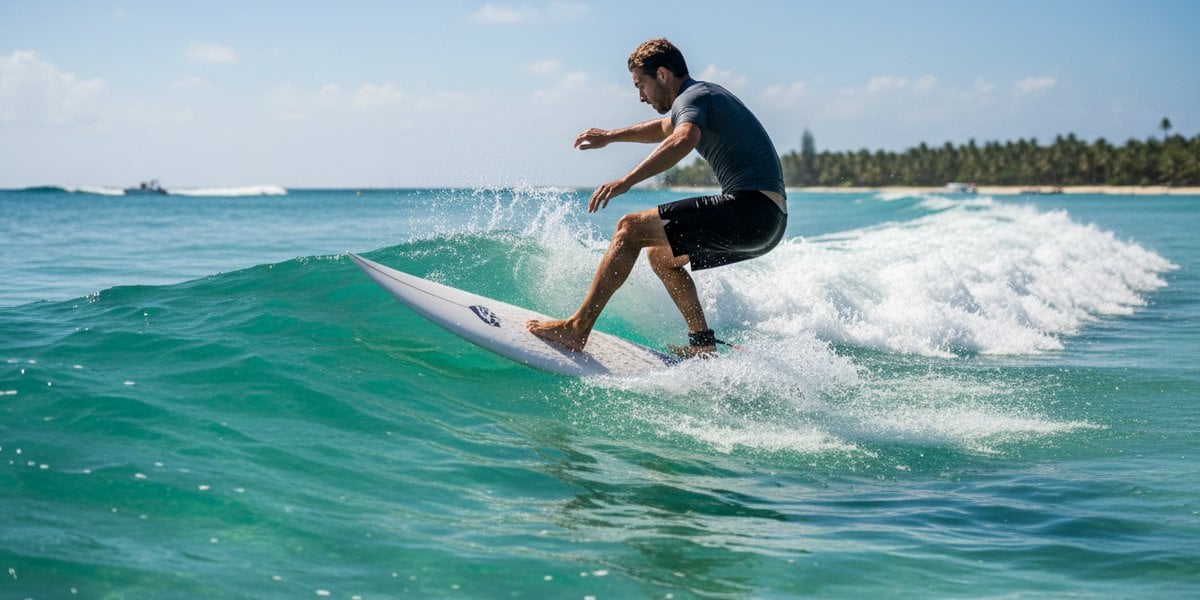
The pop-up is one of the most critical exercises in surfing. It's the quick movement that takes you from lying down to standing on the surfboard, and it determines everything that happens next on the wave. A poor pop-up will cause you to fall, lose balance or have difficulty maneuvering. A proper pop-up? That's your ticket to smooth and enjoyable surfing.
Why is the Pop-Up So Important?
The pop-up is the transition between catching the wave and surfing itself. The moment you feel the wave catching you, you have one second - sometimes even less - to execute the movement. If the movement is too slow, the wave will pass under you. If it's not precise, you'll lose balance and fall. The secret is in combining speed, precision, and core strength.
Beginning surfers tend to make two main mistakes: they place their hands in the wrong position on the surfboard, or they pull their legs instead of pushing their body upward. Both of these mistakes cause a slow and unstable pop-up, making it very difficult to continue.
Steps to a Perfect Pop-Up
Step 1: Hand placement. When you're lying on the surfboard and paddling, your hands should be positioned exactly under your shoulders, palms flat on the deck. This is the position that will give you the best leverage for pushing.
Step 2: Strong push. The moment you feel the wave catching, push forcefully with your chest and shoulders upward. This isn't a pull - it's an explosive push that lifts your entire upper body at once.
Step 3: Jump, don't pull. Instead of pulling your legs one by one, jump in one motion and bring your back foot (the foot that will be behind on the surfboard) forward, under your body. The front foot will automatically reach the correct position.
Step 4: Balanced landing. Your feet should land parallel to the centerline of the surfboard, knees slightly bent, weight centered in the middle. Your head and shoulders should be over the center of the surfboard - not leaning forward or backward.
Practice on Land - The Key to Success
One of the most important things you can do to improve your pop-up is to practice it on land. Lie down on a mattress or carpet, imagine you're paddling, and then perform the movement over and over again. Practice until the movement becomes automatic, until your body remembers it without thinking.
Land practice allows you to focus on technique without the pressure of waves, current, or fear of falling. You can do this at home, on the beach before entering the water, or anywhere you have a bit of space. Ten minutes of focused practice can make a huge difference.
Common Mistakes to Avoid
One of the most common mistakes is looking down at the board during the pop-up. This causes your weight to lean forward and leads to falling. Always look ahead, in the direction you want to surf.
Another mistake is placing your hands too far from your body or too close to the center of the board. Incorrect hand placement affects leverage and makes pushing up difficult. Always ensure your hands are positioned directly under your shoulders.
Finally, many beginners rush too much or wait too long. The timing of the pop-up is critical - you need to execute it the moment you feel the wave catching and starting to push you forward. This improves with experience, but paying attention to this feeling will help you learn faster.
Summary: Practice, Patience, and Enjoyment
A proper pop-up is a skill that takes time to master, but with consistent practice and understanding of the technique, anyone can get there. Practice on land, pay attention to hand and foot placement, and remember that the key is in a quick and explosive push - not a slow pull.
Once the pop-up becomes natural, you'll feel how your entire surfing improves. You'll be able to focus on maneuvers, reading waves, and enjoying the moment - instead of worrying about whether you'll manage to stand up on the board. This is the stage where surfing transforms from a challenge to an experience.